
Anúncios
# HTML Article: Astrology and Its Main Characteristics
Astrology has captivated humanity for millennia, offering a symbolic language that connects celestial movements with human experience and personality traits.
Anúncios


From ancient civilizations to modern digital platforms, astrology continues to evolve while maintaining its core principles. Whether you’re a skeptic or a devoted follower, understanding astrology’s fundamental characteristics reveals fascinating insights into how cultures interpret cosmic patterns.
This ancient practice combines astronomy, mythology, symbolism, and psychology to create a comprehensive system of interpretation. Let’s explore the essential elements that define astrology and make it such an enduring phenomenon across cultures and generations.
Anúncios
🌟 The Historical Foundations of Astrological Practice
Astrology’s roots stretch back over 4,000 years to ancient Mesopotamia, where Babylonian priests observed celestial patterns and correlated them with earthly events. These early astronomers didn’t distinguish between astronomy and astrology—both were intertwined as sacred sciences.
The practice spread throughout the ancient world, adapting to different cultures. Egyptian astrology focused on decans and star risings, while Greek scholars like Ptolemy systematized astrological principles in texts that would influence Western thought for centuries.
During the Hellenistic period, astrology merged with philosophy, incorporating concepts from Stoicism and Platonism. This fusion created the complex system of houses, aspects, and planetary dignities still used today.
Chinese, Vedic, and Mayan civilizations developed their own sophisticated astrological systems independently, each reflecting their unique cosmological perspectives and cultural values.
♈ The Zodiac: Twelve Archetypal Energies
The zodiac forms astrology’s foundational structure, dividing the ecliptic—the sun’s apparent path—into twelve equal segments of 30 degrees each. These signs represent distinct archetypal energies and personality patterns.
Each zodiac sign belongs to one of four elements and three modalities, creating a sophisticated classification system:
- Fire signs (Aries, Leo, Sagittarius) embody enthusiasm, creativity, and spontaneous action
- Earth signs (Taurus, Virgo, Capricorn) represent practicality, stability, and material manifestation
- Air signs (Gemini, Libra, Aquarius) govern communication, intellect, and social connection
- Water signs (Cancer, Scorpio, Pisces) channel emotion, intuition, and psychological depth
The modalities further refine these characteristics into cardinal signs (initiating), fixed signs (sustaining), and mutable signs (adapting). This creates a dynamic interplay of energies throughout the zodiac wheel.
Understanding Sign Characteristics Beyond Sun Signs
Popular astrology often focuses exclusively on sun signs—where the sun was positioned at birth. However, comprehensive astrological analysis considers the entire birth chart, including moon signs, rising signs, and planetary placements.
Your moon sign reveals emotional patterns and subconscious needs, while your rising sign (ascendant) shows how you present yourself to the world and approach new experiences.
This multi-layered approach explains why people born under the same sun sign can display vastly different personalities. The complete celestial snapshot at your birth moment creates a unique astrological fingerprint.
🪐 Planetary Influences: The Cosmic Players
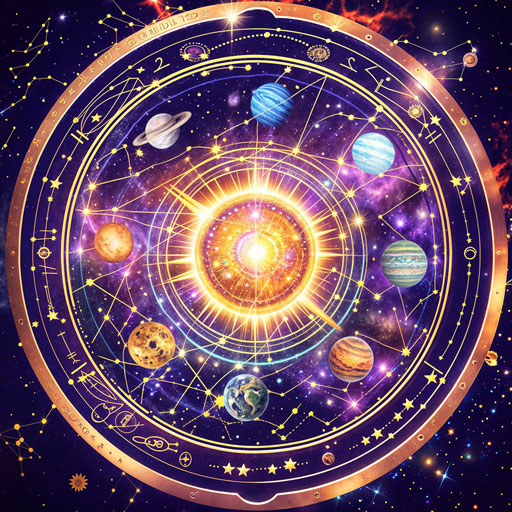
Planets function as actors on astrology’s stage, each carrying specific symbolic meanings and influencing different life areas. Traditional astrology worked with seven visible celestial bodies, while modern practice includes outer planets discovered through telescopes.
The personal planets—Sun, Moon, Mercury, Venus, and Mars—move quickly through the zodiac and influence day-to-day experiences and individual personality traits.
| Planet | Represents | Orbital Period |
|---|---|---|
| Sun ☀️ | Identity, ego, vitality | 1 year |
| Moon 🌙 | Emotions, instincts, needs | 28 days |
| Mercury ☿ | Communication, thinking | 88 days |
| Venus ♀ | Love, beauty, values | 225 days |
| Mars ♂ | Action, desire, courage | 687 days |
The social planets—Jupiter and Saturn—bridge personal and collective experiences, governing growth, wisdom, structure, and social responsibility.
Outer planets—Uranus, Neptune, and Pluto—move slowly, spending years in each sign and marking generational themes rather than individual characteristics. These transpersonal planets catalyze profound transformation and collective evolution.
Planetary Aspects: Conversations Between Celestial Bodies
Planets don’t operate in isolation; their geometric relationships create aspects—angular connections that modify how their energies interact. Major aspects include conjunctions, oppositions, trines, squares, and sextiles.
Harmonious aspects like trines (120°) and sextiles (60°) facilitate energy flow between planets, creating talents and ease. Challenging aspects like squares (90°) and oppositions (180°) generate dynamic tension that motivates growth and development.
Aspects reveal the internal dialogue within your psyche, showing where different parts of your personality cooperate smoothly or create internal conflict requiring integration.
🏠 The House System: Life’s Twelve Departments
While signs describe how energies express, houses indicate where life experiences unfold. The twelve houses divide the sky based on Earth’s daily rotation, creating a personalized framework anchored to your birth time and location.
Each house governs specific life areas, from self-identity and resources to relationships, career, and spiritual development. Planets placed in houses show where you’ll direct their energies throughout your lifetime.
The angular houses—first, fourth, seventh, and tenth—hold special significance as cardinal points of the chart, representing self, home, partnership, and public life respectively.
Different house systems exist (Placidus, Koch, Whole Sign, Equal House), each calculating house cusps differently. Despite mathematical variations, all systems aim to map the celestial sphere onto earthly experience.
🔮 Astrological Timing: Transits and Progressions
Astrology isn’t static—it tracks ongoing celestial movements and their relationship to your birth chart. This predictive dimension allows astrologers to identify significant life periods and developmental themes.
Transits occur when current planetary positions form aspects to natal chart placements. A Saturn transit might bring tests and maturation, while a Jupiter transit often correlates with expansion and opportunity.
Progressions use symbolic motion—typically moving the chart one day forward for each year of life—to reveal internal psychological development and unfolding potential.
Solar returns, calculated when the sun returns to its exact birth position annually, provide insight into the year ahead. Lunar returns, occurring monthly, offer more frequent timing indicators.
🌍 Different Astrological Traditions Worldwide
While Western tropical astrology dominates popular culture, numerous astrological systems exist globally, each with distinct philosophical foundations and methodological approaches.
Vedic Astrology: The Jyotish System
Indian Vedic astrology (Jyotish) uses the sidereal zodiac, which accounts for precession—the slow wobble of Earth’s axis. This creates a roughly 24-degree difference from Western tropical positions.
Jyotish emphasizes lunar mansions (nakshatras), planetary periods (dashas), and remedial measures through gemstones, mantras, and rituals. Its integration with Hindu philosophy and karma doctrine creates a spiritually oriented predictive system.
Chinese Astrology: Cycles and Elements
Chinese astrology operates on a sixty-year cycle combining twelve animal signs with five elements. Rather than sun signs, it emphasizes year, month, day, and hour pillars called the Four Pillars of Destiny.
This system integrates deeply with Chinese medicine, feng shui, and Taoist philosophy, viewing time itself as possessing qualitative characteristics that influence events and personalities.
Hellenistic and Medieval Techniques
Recent decades have witnessed a revival of ancient Hellenistic and Medieval astrological techniques, including sect (day/night chart distinctions), essential dignities, and profection—an annual timing method moving one house per year.
These traditional methods offer sophisticated predictive tools that differ from modern psychological approaches, focusing more on concrete life events and timing.
🧠 Psychological Astrology and Modern Applications
Twentieth-century developments transformed astrology from event prediction toward psychological insight and self-understanding. Carl Jung’s engagement with astrology legitimized it within depth psychology circles.
Psychological astrology emphasizes the birth chart as a map of psyche, showing innate potentials, complexes, and developmental paths rather than fixed destiny. This humanistic approach empowers individuals to work consciously with their astrological patterns.
Modern astrologers often integrate other systems—Myers-Briggs typology, Enneagram, Human Design—creating interdisciplinary approaches to personality and growth.
Evolutionary astrology adds reincarnation concepts, viewing the chart as showing soul intentions and karmic patterns requiring resolution across lifetimes.
📊 Astrology and Science: The Ongoing Debate
Astrology’s relationship with mainstream science remains contentious. Critics argue that controlled studies show no correlation between celestial positions and personality or events beyond statistical chance.
The precession problem—that constellation positions have shifted since ancient zodiac establishment—challenges literal celestial influence theories, though tropical astrology counters that it measures seasonal rather than stellar positions.
Some researchers propose potential mechanisms like solar wind variations, gravitational effects, or electromagnetic influences, though none have achieved scientific consensus or empirical verification.
Defenders argue astrology operates symbolically rather than causally, functioning as a language of correlation and meaning rather than mechanical cause-effect. This positions it closer to humanities than hard sciences.
✨ Practical Applications in Contemporary Life
Despite scientific skepticism, millions worldwide consult astrology for guidance in relationships, career decisions, timing initiatives, and self-understanding. Modern technology has democratized access through apps, websites, and automated chart generation.
Electional astrology helps choose optimal timing for important events like weddings, business launches, or surgeries. Horary astrology answers specific questions through charts cast for the question moment.
Relationship astrology (synastry) compares two charts to assess compatibility, highlighting both harmonious connections and growth challenges between individuals.
Financial astrology applies celestial patterns to market cycles, though its effectiveness remains debated. Some traders use planetary transits alongside technical analysis.
🎯 Learning Astrology: Resources and Approaches
Studying astrology requires patience and multi-layered learning. Begin with understanding zodiac signs, planetary meanings, and house significance before advancing to aspects, dignities, and predictive techniques.
Quality books from respected astrologers provide foundational knowledge. Online courses offer structured learning paths with interactive elements. Practice reading charts—starting with your own—develops interpretive skills.
Join astrology communities online or locally to discuss charts, share insights, and learn from experienced practitioners. Regular sky watching connects astrological study with direct celestial observation.
Remember that astrological literacy develops gradually. Complex chart synthesis emerges from accumulated pattern recognition rather than memorized keywords.
🌙 Ethical Considerations in Astrological Practice
Professional astrologers face ethical responsibilities regarding client welfare, predictive statements, and psychological boundaries. Avoiding fatalistic pronouncements that disempower clients remains paramount.
Astrologers should recognize their limitations, referring clients to mental health professionals when appropriate. Charts reveal potentials and patterns, not absolute predetermined outcomes.
Respecting client confidentiality and maintaining professional boundaries mirrors standards in counseling fields. Continuing education ensures practitioners stay current with evolving astrological knowledge.
Cultural sensitivity matters when working with clients from backgrounds with different astrological traditions or religious views potentially conflicting with astrological practice.
🔆 The Future of Astrological Practice
Astrology continues evolving in the digital age. Artificial intelligence and machine learning create sophisticated chart interpretation programs, though human intuition and contextual understanding remain irreplaceable.
Social media has created vibrant astrology communities, though meme culture sometimes reduces complex concepts to oversimplified stereotypes. Balancing accessibility with depth challenges contemporary practice.
Growing interest among younger generations suggests astrology fulfills needs for meaning, self-understanding, and connection that secular modern life sometimes lacks. Its symbolic richness offers narrative frameworks for life experiences.
Integration with other wellness practices—mindfulness, coaching, therapy—positions astrology within broader personal development contexts rather than isolated fortune-telling.
Whether viewed as cosmic science, symbolic art, psychological tool, or spiritual practice, astrology’s enduring appeal testifies to humanity’s persistent desire to find patterns, meaning, and connection between individual lives and the greater cosmos. Its main characteristics—zodiac signs, planetary influences, house systems, aspects, and timing techniques—create a comprehensive language for exploring human nature and experience.
As both ancient wisdom and evolving practice, astrology invites each generation to rediscover its insights while adapting its application to contemporary needs and understanding. The stars may not compel, as the old saying goes, but they continue to inspire, guide, and illuminate the perpetual human journey toward self-knowledge and cosmic connection.
