
Anúncios
Measuring things used to mean carrying a bulky tape measure everywhere. Now, your smartphone can do the job instantly with just a few taps.


The digital revolution has transformed countless everyday tools, and measuring devices are no exception. What once required a physical tape measure can now be accomplished using augmented reality and your phone’s camera. This shift represents more than just technological novelty—it’s a practical solution that addresses real limitations of traditional measuring tools.
Anúncios
Whether you’re shopping for furniture, planning a home renovation, or simply curious about dimensions around you, the choice between traditional and digital measuring tools affects your convenience and accuracy. Let’s explore how these two approaches compare and why digital measurement apps might become your new favorite tool. 📱
The Traditional Tape Measure: Reliable but Limited
The traditional tape measure has served us faithfully for decades. It’s a straightforward mechanical tool that extends to measure linear distances, typically ranging from 10 to 25 feet for household versions. Contractors and professionals often carry larger versions extending 50 feet or more.
Anúncios
There’s something reassuringly tangible about a physical tape measure. You can feel the metal or fabric tape extend, see the precise markings, and trust the mechanical simplicity. No batteries required, no learning curve, and no technology to fail when you need it most.
However, this reliability comes with significant drawbacks. Traditional tape measures require you to remember to bring them along. They take up pocket or toolbox space, and the retractable mechanism can jam or break over time. The tape itself can kink, tear, or become difficult to read as markings wear away.
When Traditional Tape Measures Fall Short
Imagine you’re at a furniture store and spot the perfect couch. You measure the space at home before leaving, but did you account for doorway widths? What about the diagonal measurement through narrow hallways? Without your tape measure, you’re left guessing or making a wasted trip back home.
Single-person measurements present another challenge. Measuring long distances alone with a traditional tape means struggling to hold one end while extending the other, often resulting in the tape retracting at the worst possible moment. Vertical measurements are particularly awkward without assistance.
Reading measurements in dim lighting or at awkward angles can lead to errors. The small markings require good eyesight and proper lighting conditions. Plus, recording multiple measurements means writing them down separately, creating opportunities for transcription mistakes.
Digital Measuring Apps: Your Phone Becomes a Toolkit 📐
Digital measuring apps transform your smartphone into a sophisticated measurement device using augmented reality technology. By leveraging your phone’s camera and sensors, these apps can measure distances, heights, areas, and even complex three-dimensional spaces.
The technology works by identifying surfaces and reference points through your camera, then calculating distances using complex algorithms. Most modern smartphones have the necessary hardware—cameras with depth sensors, accelerometers, and gyroscopes—making digital measurement accessible to millions of users without additional equipment.
Apps like AR Ruler, Measure by Apple, and specialized tools offer varying features, but they share a common advantage: they’re always with you. Your phone is already in your pocket or bag, meaning you’re perpetually prepared to measure anything, anywhere, at any time.
Instant Availability Changes Everything
The most transformative aspect of digital measuring apps is their constant availability. You’re browsing a garage sale and find a cabinet that might fit your space—pull out your phone and measure right there. You’re at the hardware store wondering if that shelf will fit—measure instantly without searching for a store employee with a tape measure.
This immediate accessibility eliminates the planning required with traditional tools. You don’t need to anticipate measurement needs or carry extra equipment. The spontaneous nature of digital measuring supports impromptu decisions and removes friction from everyday tasks.
For travelers and professionals constantly on the move, this portability advantage multiplies. Real estate agents can measure properties without carrying toolboxes. Interior designers can capture dimensions during client consultations. Even casual users benefit when unexpected measurement needs arise.

Extra Features That Make Digital Measurement Smarter 🎯
Beyond basic linear measurements, digital apps offer capabilities impossible with traditional tape measures. These features transform simple measurement into comprehensive spatial documentation and planning tools.
Automatic Recording and Organization
Digital apps automatically save your measurements with timestamps and location data. No more scribbled notes on paper scraps or trying to remember which number corresponds to which space. Your measurements are organized, searchable, and accessible across devices through cloud synchronization.
Many apps allow you to label measurements and attach photos, creating a complete visual record. Measuring a room for renovation? Capture dimensions alongside pictures showing electrical outlets, windows, and architectural features. This integrated documentation proves invaluable when planning projects or communicating with contractors.
Multiple Measurement Types in One Tool
Where traditional tape measures handle only linear distance, digital apps offer multiple measurement modes. Measure height, width, area, volume, and angles without switching tools. Calculate the square footage of a room automatically rather than measuring and manually computing.
Some advanced apps provide specialized functions like calculating optimal furniture placement, estimating material quantities for projects, or even measuring distances to hard-to-reach places using phone sensors and trigonometry. These capabilities would require multiple traditional tools or complex manual calculations.
Unit Conversion Made Simple
Working with measurements in different units becomes effortless with digital apps. Instantly convert between metric and imperial systems—feet to meters, inches to centimeters—with a single tap. This flexibility is particularly valuable for international projects, online shopping from global retailers, or following instructions written in different measurement systems.
Traditional tape measures typically show dual markings, but reading and converting between them still requires mental effort and increases error potential. Digital apps eliminate this cognitive load entirely.
Real-World Situations Where Digital Wins Decisively 🏆
Furniture Shopping Without the Guesswork
You’re furniture shopping and find pieces you love. With a digital measuring app, you can measure the furniture dimensions right in the store, then immediately measure doorways, hallways, and the intended space at home using photos you’ve taken previously. The app can even help visualize whether items will fit through narrow passages.
Compare this to the traditional approach: measuring at home before leaving, writing down numbers, measuring furniture in-store, then mentally calculating whether everything will work. The digital method reduces uncertainty and prevents costly purchasing mistakes.
DIY Projects and Home Improvements
Planning to install floating shelves? A digital app lets you measure wall space, visualize placement using AR overlay features, and calculate the exact distances for bracket placement. Take photos with measurement annotations to reference while shopping for materials or during installation.
Traditional measuring for the same project involves multiple measurements with a tape measure, marking walls with pencil, and hoping your calculations are correct. The digital approach provides visual confirmation before you commit to drilling holes.
Shipping and Packaging Calculations
Need to ship an oddly-shaped item? Digital measuring apps can calculate three-dimensional dimensions quickly, helping you determine the right box size and estimate shipping costs accurately. Some apps even provide volume calculations automatically, information that’s tedious to compute manually.
With traditional methods, measuring length, width, and height separately, then calculating volume and comparing to box dimensions becomes a multi-step process prone to errors that could result in choosing wrong packaging or underestimating costs.
Estimating Paint or Flooring Needs
Measuring a room’s area for paint or flooring purchases becomes streamlined with digital tools. Point your camera at the walls or floor, and many apps will calculate total square footage automatically, accounting for irregular shapes. Some even subtract door and window areas from the total.
The traditional approach requires measuring multiple walls, manually calculating areas, and performing arithmetic to reach final figures. Each step introduces potential for calculation errors that could lead to purchasing too much or too little material.
Addressing the Accuracy Question 🎯
A common concern about digital measuring apps is accuracy compared to traditional tape measures. It’s a valid consideration, and the answer depends on your specific needs and how you use the technology.
High-quality measuring apps on modern smartphones typically achieve accuracy within 1-2% for distances up to 10 feet under good conditions. For most everyday applications—furniture shopping, home decoration, basic DIY projects—this accuracy is more than sufficient. Professional-grade applications requiring precision to fractions of an inch still benefit from traditional tools or specialized laser measures.
Factors affecting digital measurement accuracy include lighting conditions, surface textures, camera quality, and user technique. Measuring plain surfaces in good lighting yields better results than complex textures in dim environments. However, apps are continuously improving as smartphone sensors advance and AR algorithms become more sophisticated.
When to Choose Traditional Over Digital
Certain situations still favor traditional tape measures. Precision carpentry, electrical work, and professional construction often require the guaranteed accuracy of physical tools. When measurements must be exact to 1/16 inch or better, traditional methods remain superior.
Working in environments with poor lighting, highly reflective surfaces, or where pulling out a phone isn’t practical also suggests traditional tools. Battery-powered devices can fail at inconvenient moments, while mechanical tape measures work regardless of charge status.
The ideal solution for many users is using both tools complementarily. Keep a traditional tape measure for precision work while relying on digital apps for everyday convenience and preliminary measurements.
Learning to Use Digital Measuring Apps Effectively 💡
Getting started with digital measuring apps requires minimal effort, but understanding a few techniques dramatically improves results. Most apps provide brief tutorials, and the learning curve is gentle compared to mastering other software tools.
Calibration and Setup
Many apps benefit from initial calibration to optimize accuracy for your specific device. This typically involves measuring a known distance or object to establish a baseline. Spending a few minutes on calibration significantly improves subsequent measurement reliability.
Ensure your phone’s camera lens is clean before measuring. Smudges and dirt can interfere with AR recognition and distance calculations. This simple maintenance step that takes seconds can prevent frustrating inaccurate readings.
Measurement Techniques for Best Results
When measuring with digital apps, hold your phone steady and allow the software time to recognize surfaces and establish reference points. Moving too quickly or with shaky hands reduces accuracy. Many apps provide visual feedback when they’ve locked onto surfaces properly.
For longer distances, measure in segments and use the app’s ability to save intermediate points. This approach improves accuracy and helps when obstacles prevent direct line-of-sight measurements. Take multiple measurements of critical dimensions to verify consistency.
Adequate lighting dramatically affects performance. While apps work in various lighting conditions, moderate indirect light provides the best surface recognition. Avoid measuring in direct sunlight, which can wash out your camera feed and confuse AR algorithms.
The Cost Advantage You Can’t Ignore 💰
Quality traditional tape measures range from affordable basic models at $5-10 to professional-grade versions costing $30-50 or more. Specialty measuring tools like laser distance meters quickly escalate to $50-200 depending on features and accuracy.
Digital measuring apps range from completely free to premium versions costing $5-15 as a one-time purchase or modest subscription. Considering you already own a smartphone, the additional cost is minimal or non-existent. You’re essentially unlocking new functionality from a device you’ve already invested in.
The value proposition becomes even clearer when considering the multiple measurement types digital apps provide. Buying equivalent functionality through traditional tools—tape measures, protractors, levels, area calculators—would cost significantly more and require carrying multiple items.
Environmental and Practical Sustainability ♻️
Digital measuring apps contribute to reducing physical waste. Traditional tape measures eventually break, wear out, or get lost, requiring replacement and generating waste. Digital tools exist as software, creating no physical waste and requiring no raw materials for manufacturing.
The consolidated functionality means fewer total tools to manufacture, ship, and eventually dispose of. While smartphones themselves have environmental costs, maximizing their utility through versatile apps improves the overall sustainability equation.
From a practical sustainability perspective, having measurement tools always available reduces return trips and wasted efforts. Fewer mistakes mean less material waste from purchasing incorrect quantities or wrong-sized items.
Making Digital Measuring Part of Your Daily Toolkit 🔧
Integrating digital measuring apps into your routine creates opportunities you might not initially recognize. Once available, you’ll find yourself measuring things you previously wouldn’t have bothered with—not because you desperately needed to, but because the barrier to doing so has essentially disappeared.
Curious about the height of that tree in your yard? Measure it in seconds. Wonder if your car will fit in that parking spot? Quick measurement provides the answer. These spontaneous measurements might seem trivial individually, but collectively they represent increased understanding and confidence in spatial decision-making.
For professionals, digital apps complement existing tools and workflows. Real estate agents can measure properties during showings without carrying equipment. Delivery personnel can verify package dimensions on-site. Even teachers can use measuring apps for educational demonstrations and student engagement.
Why You Should Try Digital Measuring Today 🚀
The beauty of digital measuring apps is their low barrier to entry. You can download an app right now and start measuring immediately—no trip to the hardware store, no additional device to purchase, no commitment beyond a few minutes of experimentation.
Start with something simple: measure the room you’re in right now. Measure your desk, doorway, or window. Experience how quickly you can capture dimensions compared to searching for a tape measure, extending it properly, and recording numbers manually. The convenience becomes immediately apparent.
As you use the app more frequently, you’ll discover situations where instant measurement capability proves surprisingly valuable. That moment when you’re shopping and can verify dimensions immediately, avoiding a wasted purchase or return trip—that’s when digital measuring transitions from novelty to indispensable tool.
Digital measuring isn’t about completely replacing traditional tools. It’s about expanding your capabilities and removing barriers that previously existed. Having measurement tools literally in your pocket at all times changes your relationship with spatial information, making you more informed and confident in everyday decisions.
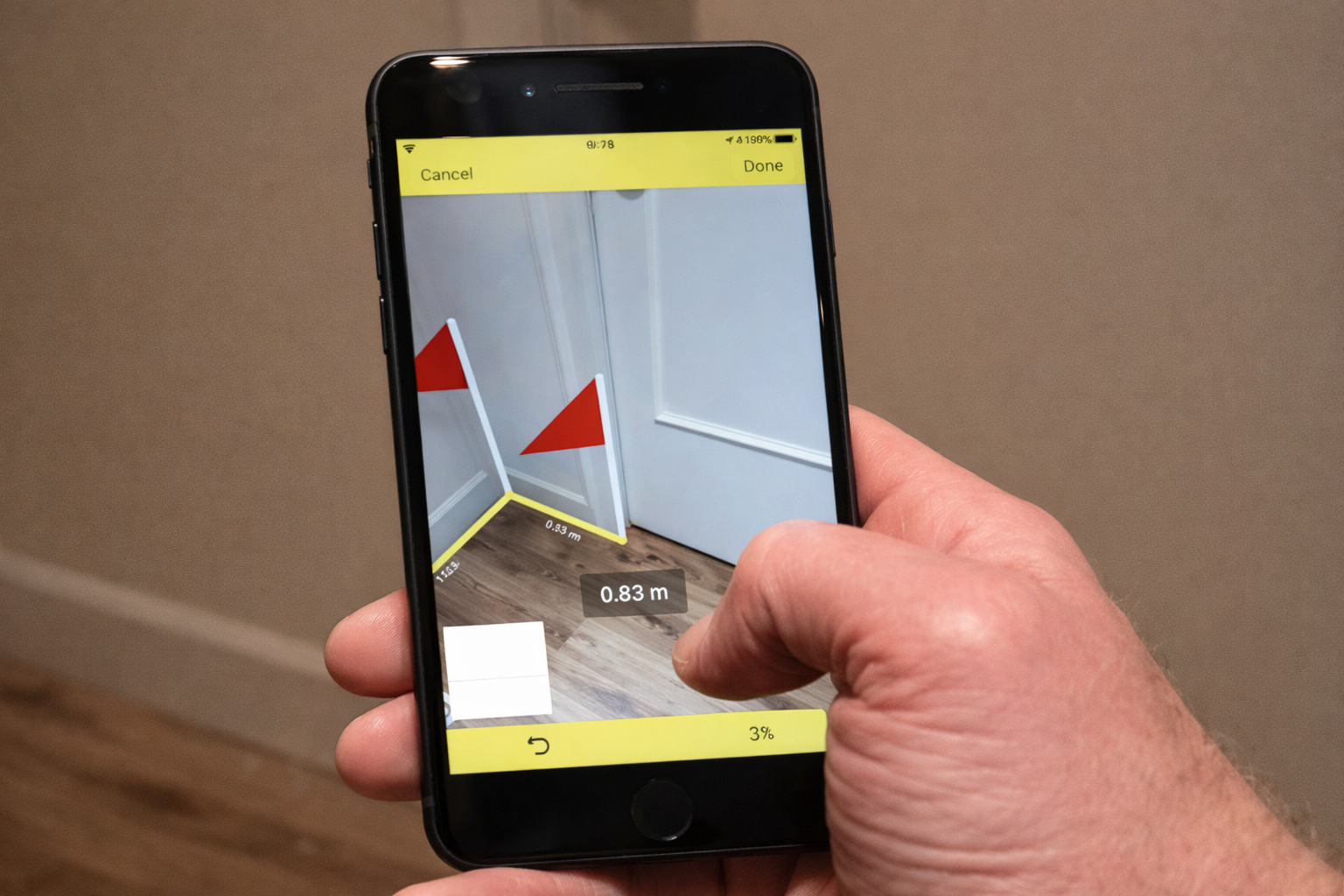
Take the Next Step: Experience the Difference Yourself 📲
Reading about digital measuring apps provides understanding, but experiencing them firsthand reveals their true value. The intuitive interfaces, instant results, and practical convenience become clear only through actual use. Within minutes of downloading your first measuring app, you’ll understand why millions of users have already made the switch.
Whether you’re planning home improvements, shopping for furniture, helping friends move, or simply curious about the world around you, digital measuring apps offer capabilities that traditional tools cannot match. The combination of availability, extra features, automatic recording, and zero additional equipment requirements creates a compelling advantage for modern life.
Don’t let outdated tools limit your potential. Download a digital measuring app today and discover how spatial awareness and measurement convenience can transform everyday tasks. Your smartphone is already capable—unlock its measuring potential and experience the future of dimensional awareness. The next time you need to measure something, you’ll appreciate having a sophisticated tool ready instantly, right in your pocket.
Start measuring smarter today. Your future self will thank you when you’re effortlessly capturing accurate dimensions while others are searching for tape measures or guessing at measurements. The digital advantage is real, immediate, and waiting for you to discover. ✨
