
Anúncios
Is there really a right age to learn how to read? This question challenges outdated beliefs and opens doors to lifelong learning possibilities.

The traditional belief that literacy must be achieved during childhood has been shattered by thousands of inspiring stories worldwide. Adults and seniors are proving that determination knows no age limits, and technology is becoming their greatest ally in this transformative journey.
Anúncios
Today’s digital tools have revolutionized how older adults approach learning, making literacy accessible, comfortable, and enjoyable. Mobile applications specifically designed for adult learners are changing lives one lesson at a time, bringing hope and independence to those who once thought their opportunity had passed.
📚 Breaking the Age Barrier in Literacy Education
For decades, society perpetuated the myth that learning to read was exclusively a childhood activity. This misconception prevented millions of capable adults from pursuing literacy, creating unnecessary shame and embarrassment around a perfectly achievable goal.
Anúncios
Recent studies demonstrate that the adult brain remains remarkably adaptable throughout life. Neuroplasticity—the brain’s ability to form new neural connections—doesn’t disappear with age. While children may learn certain skills faster, adults bring valuable advantages to the learning process, including motivation, life experience, and self-discipline.
Maria, a 67-year-old grandmother from a rural community, recently learned to read using her smartphone. “I always thought I was too old,” she shares. “But when my grandson showed me an app designed for people like me, everything changed. Now I can read bedtime stories to my great-grandchildren.”
🌟 Why Seniors Are Returning to Education Now
The surge in older adults pursuing literacy isn’t coincidental. Several factors have converged to create this educational renaissance among senior populations worldwide.
First, increased life expectancy means many seniors enjoy active, healthy decades ahead. The prospect of living 20 or 30 more years provides strong motivation to acquire new skills that enhance quality of life and independence.
Second, the digital transformation of society has made reading skills more essential than ever. From navigating healthcare portals to staying connected with family through messaging apps, literacy has become crucial for full participation in modern life.
Third, the reduction of social stigma around adult learning has empowered older individuals to pursue education without embarrassment. Community programs, online forums, and supportive family members celebrate these achievements rather than questioning them.
💪 Personal Motivations Driving This Movement
Beyond societal factors, deeply personal reasons inspire seniors to begin their literacy journey:
- Independence: Reading medication labels, bills, and official documents without assistance
- Connection: Communicating with distant family members through written messages
- Dignity: Overcoming the shame of concealing illiteracy throughout adulthood
- Legacy: Setting an example for children and grandchildren about lifelong learning
- Mental health: Engaging the brain to maintain cognitive function and prevent decline
- Opportunity: Accessing information, entertainment, and services previously unavailable
Robert, age 72, explains his motivation simply: “I got tired of pretending I could read restaurant menus. I wanted to stop relying on others for everything written. Learning to read gave me back my dignity.”
📱 How Mobile Apps Are Revolutionizing Adult Literacy
Technology has transformed adult education by removing traditional barriers that once prevented older learners from accessing literacy programs. Mobile applications specifically designed for adult learners offer unprecedented convenience, privacy, and adaptability.
Unlike classroom settings that may feel intimidating or embarrassing for older adults, smartphone apps provide a judgment-free learning environment. Students can practice at their own pace, repeat lessons as needed, and progress without comparison to others or fear of public mistakes.
These applications incorporate principles of adult learning theory, recognizing that mature students learn differently than children. They focus on practical, immediately applicable skills rather than abstract concepts, keeping motivation high through visible progress.
✨ Key Features That Make Apps Effective for Seniors
Modern literacy apps designed for older adults include specific features that address their unique needs:
- Large, clear fonts: Accommodating vision changes common in aging
- Adjustable speed: Allowing learners to control lesson pace completely
- Voice guidance: Providing audio instructions for pre-literate users
- Practical vocabulary: Teaching words encountered in daily life first
- Short lessons: Preventing fatigue with 10-15 minute sessions
- Offline capability: Enabling learning without constant internet connection
- Progress tracking: Celebrating achievements and maintaining motivation
- Repetition without judgment: Allowing unlimited practice on difficult concepts
The privacy aspect cannot be overstated. Many older adults have concealed their illiteracy for decades, developing elaborate coping strategies. Mobile apps allow them to learn discreetly, building confidence before revealing their new skills to family and friends.
🎯 The Learning Process: Simple, Structured, and Achievable
Effective literacy apps for older adults follow a carefully designed progression that builds confidence while developing skills. The process typically begins with letter recognition and phonics, establishing the fundamental building blocks of reading.
Initial lessons focus on the alphabet, teaching letter shapes, names, and sounds through visual and audio reinforcement. Repetition helps cement these concepts in memory without feeling tedious, as varied exercises keep engagement high.
Once letter recognition becomes solid, apps introduce simple word formation. Students combine letters to create meaningful words, starting with common, high-frequency vocabulary from everyday life—words like “bread,” “water,” “medicine,” and family names.
📝 Daily Practice Makes Progress Possible
Consistency matters more than intensity in adult literacy education. Apps encourage daily practice through gentle reminders and achievable goals that fit into busy lives without overwhelming learners.
A typical daily routine might include:
- Morning review (5 minutes): Reinforcing previous lessons before starting the day
- New lesson (10-15 minutes): Introducing one new concept or skill
- Practice exercises (10 minutes): Applying new knowledge through interactive activities
- Evening review (5 minutes): Quick reinforcement before bed for better retention
This structured approach prevents frustration while ensuring steady progress. Students can see measurable improvement weekly, which sustains motivation through challenging moments when progress feels slow.
Elena, age 69, describes her experience: “I practice during my morning coffee and again before dinner. Just 30 minutes a day, but after three months, I can read simple texts. It feels like magic, but it’s just consistent effort.”
🧠 Cognitive Benefits Beyond Literacy
Learning to read in later life offers advantages that extend far beyond the ability to decode written text. The mental stimulation involved in literacy acquisition provides significant cognitive benefits for aging brains.
Neurological research shows that learning new skills, particularly language-related abilities, strengthens neural pathways and may help prevent or delay cognitive decline. The concentration, memory work, and problem-solving required in literacy learning function as comprehensive brain exercise.
Additionally, newly literate seniors often report improved self-confidence that positively affects other life areas. Success in learning to read encourages them to attempt other previously intimidating challenges, creating a virtuous cycle of personal growth and empowerment.
🌈 Emotional and Social Transformations
The psychological impact of adult literacy achievement cannot be measured in test scores alone. Students describe profound emotional shifts as they gain reading ability:
- Reduced anxiety: No longer fearing situations involving written text
- Increased independence: Making decisions without constant assistance
- Enhanced relationships: Communicating more effectively with loved ones
- Greater civic participation: Engaging with community information and activities
- Expanded entertainment: Accessing books, articles, and online content independently
- Improved health management: Understanding medical information and prescriptions
Thomas, who learned to read at 74, shares: “I can finally send birthday messages to my children without asking for help. That simple act means more to me than anyone could understand. It’s not just reading—it’s freedom.”
🚀 Getting Started: Your Journey Begins Today
Starting the literacy learning process feels daunting, but modern apps make the first step remarkably simple. Most require only a smartphone or tablet and a few minutes of daily commitment.
Begin by downloading an app specifically designed for adult learners. These applications understand your unique needs and won’t treat you like a child. The initial assessment helps customize lessons to your current skill level, ensuring you start at the perfect point.
Don’t worry about technology skills—these apps are designed with simplicity in mind. Large buttons, clear instructions, and intuitive navigation make them accessible even to those new to smartphones. Many include tutorial videos showing exactly how to use each feature.
💡 Tips for Success in Your Learning Journey
Maximize your progress with these practical strategies from successful adult learners:
- Set a regular schedule: Choose the same time daily for practice to build habit
- Start small: Even 10 minutes daily produces results over time
- Celebrate progress: Acknowledge every achievement, no matter how minor it seems
- Be patient with yourself: Learning takes time at any age—progress isn’t always linear
- Practice in context: Apply new skills to real-world situations immediately
- Ask for support: Share your goal with trusted family or friends for encouragement
- Remove distractions: Create a quiet, comfortable learning environment
- Track your journey: Keep notes on progress to see how far you’ve come
Remember that every person who reads fluently today was once a beginner. Your age doesn’t determine your capacity to learn—only your willingness to try matters.
🌍 Real Stories of Transformation
Across the globe, seniors are rewriting their life stories through literacy. These transformations remind us that it’s never too late to change your circumstances and achieve long-held dreams.
Carmen, age 81, learned to read specifically to enjoy novels during her retirement. “I always loved stories, but I had to rely on audiobooks and television. Now I can browse the library and choose books myself. Last month, I finished my first complete novel. I cried when I turned the final page.”
David, 70, wanted to read the Bible independently. “My faith is important to me, but I always needed others to read scripture aloud. Learning to read let me study on my own terms, at my own pace. It deepened my spiritual life in ways I never expected.”
These stories aren’t exceptional—they’re becoming increasingly common as awareness spreads about adult literacy resources. Each success inspires others to begin their own journeys, creating communities of learners who support and motivate each other.
🎁 The Gift You Give Yourself and Others
Learning to read in your senior years represents a profound gift to yourself—independence, dignity, and endless opportunities for growth and enjoyment. But the benefits extend beyond personal gain.
Your example powerfully influences family members, especially grandchildren. Demonstrating that learning never stops teaches invaluable lessons about perseverance, humility, and the joy of self-improvement. Children who watch grandparents tackle challenging new skills develop healthier attitudes toward their own learning struggles.
Additionally, your success contributes to breaking down societal barriers around adult literacy. Every person who openly shares their learning journey reduces stigma and encourages others facing similar challenges to seek help rather than remain hidden.
⏰ Why Starting Today Matters More Than Waiting
Procrastination tempts everyone, especially when facing intimidating challenges. You might think you’ll start next week, next month, or when circumstances feel more favorable. But the truth is that perfect conditions rarely arrive—and every delayed day represents lost opportunity.
The best time to learn to read was years ago. The second-best time is right now, today, this moment. Every day you wait is another day without the freedom, joy, and independence that literacy provides.
Consider what you could accomplish in the next six months with just 15 minutes of daily practice. By this time next year, you could be reading newspapers, sending written messages to family, or enjoying your first novel. Those months will pass regardless—why not emerge from them with a life-changing new skill?
Technology has removed the barriers that once made adult literacy education difficult to access. No embarrassing classroom situations, no expensive tutors, no rigid schedules—just you, your device, and an app designed specifically to help people exactly like you succeed.
🌟 Take the First Step Right Now
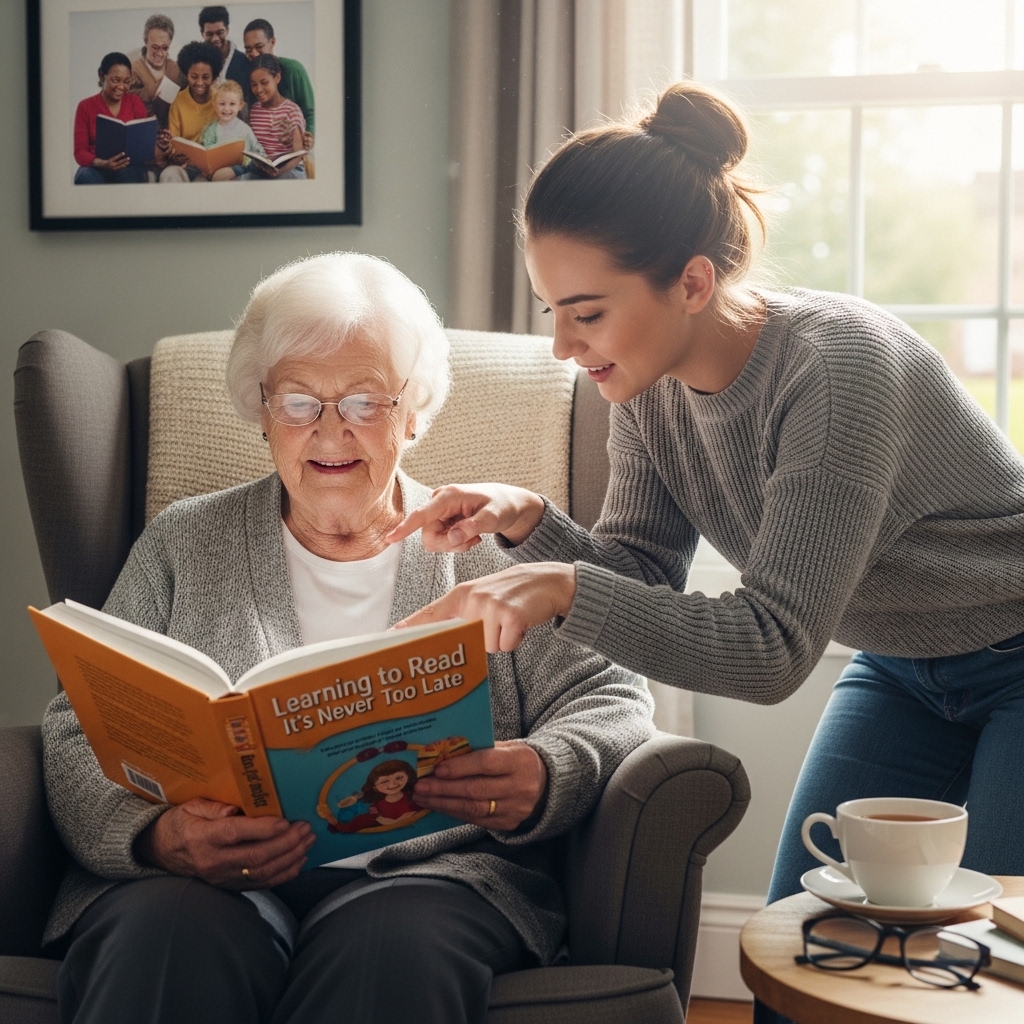
Your literacy journey doesn’t require dramatic life changes or enormous time commitments. It begins with one simple action: downloading an app designed to teach adults to read at their own pace, in complete privacy and comfort.
These specialized applications understand your unique situation. They won’t rush you, judge you, or compare you to others. They’ll meet you exactly where you are and guide you forward with patience, clarity, and encouragement.
Imagine holding your phone six months from now, reading a message from your grandchild without assistance. Picture yourself navigating a website independently, understanding medication instructions clearly, or finally reading that book you’ve always been curious about. These aren’t fantasies—they’re completely achievable goals within your reach.
Thousands of seniors have already discovered this powerful tool and transformed their lives through consistent daily practice. They started exactly where you are now—uncertain, perhaps a bit scared, but willing to try. That willingness made all the difference.
Don’t let another day pass wishing you could read. The technology exists, the method works, and you absolutely have the ability to succeed. Your age isn’t an obstacle—it’s simply a number. Your determination, consistency, and willingness to learn matter far more.
Download the app today. Complete just one lesson. See for yourself how accessible and encouraging the learning process can be. You deserve the independence, confidence, and opportunities that literacy brings. Start your journey now—your future literate self will thank you. 📖✨
