
Anúncios
Measuring spaces, objects, and distances has never been easier thanks to digital tape measure apps that transform your smartphone into a powerful measuring tool.
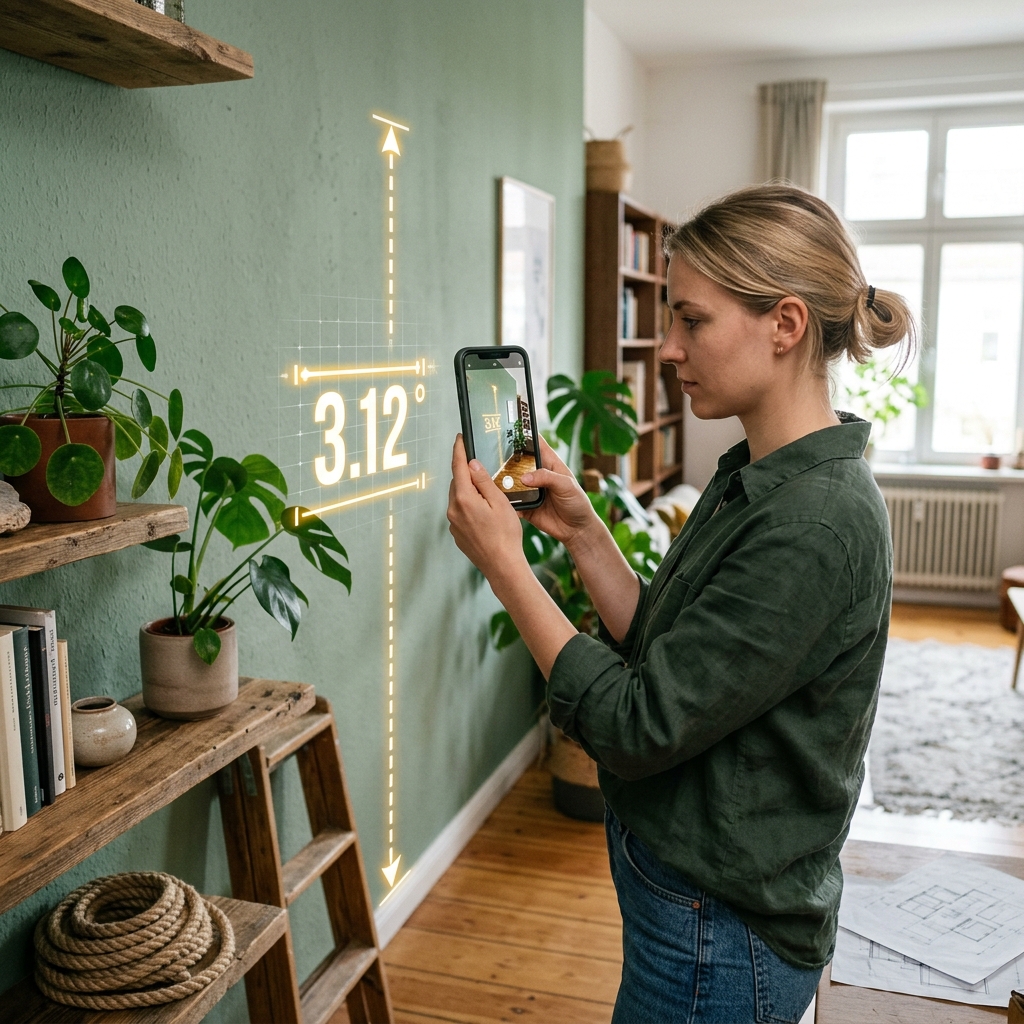
Gone are the days when you needed to carry bulky measuring tapes or rulers everywhere you went. Modern technology has brought us innovative solutions that fit right in our pockets. Digital tape measure apps leverage augmented reality (AR), camera sensors, and sophisticated algorithms to provide surprisingly accurate measurements with just a few taps on your screen.
Whether you’re a professional contractor, interior designer, DIY enthusiast, or simply someone who occasionally needs to measure furniture before buying, these apps offer convenience and functionality that traditional tools can’t match. Let’s explore the fascinating world of digital measuring applications and discover how they’re revolutionizing the way we interact with physical spaces. 📱✨
Anúncios
Understanding How Digital Tape Measure Apps Work 🔍
Digital tape measure apps utilize your smartphone’s advanced hardware and software capabilities to calculate distances and dimensions. The technology behind these applications is more sophisticated than you might imagine, combining multiple sensors and computational methods to deliver accurate results.
Most modern apps rely on augmented reality technology, specifically ARKit for iOS devices and ARCore for Android smartphones. These frameworks use your phone’s camera, gyroscope, and accelerometer to map the three-dimensional space around you. By detecting surfaces, edges, and reference points, the app can calculate distances between two or more points with remarkable precision.
Anúncios
Some applications also incorporate LiDAR (Light Detection and Ranging) technology, particularly on newer iPhone models like the iPhone 12 Pro and later. LiDAR sensors emit laser pulses that bounce off objects and return to the sensor, allowing for even more accurate depth sensing and measurement capabilities. This results in measurements that can rival traditional tools in many scenarios.
Top Features to Look for in Digital Measuring Apps 🌟
When choosing a digital tape measure app, certain features can significantly enhance your measuring experience. Understanding what to look for helps you select the right tool for your specific needs.
- Multiple measurement modes: The best apps offer various measuring options including linear distance, height measurement, area calculation, and volume estimation.
- Unit conversion: Seamless switching between metric and imperial units (centimeters, meters, inches, feet) makes the app versatile for different projects and regions.
- Screenshot and annotation tools: The ability to capture measurements with photos and add notes directly on images proves invaluable for documentation.
- Level and angle measurement: Integrated tools for checking if surfaces are level or measuring angles expand the app’s utility beyond simple distance measuring.
- History and project management: Saving past measurements and organizing them by project helps professionals keep track of multiple jobs simultaneously.
- Export and sharing options: Sending measurements via email, messaging apps, or cloud storage facilitates collaboration and record-keeping.
Practical Applications Across Different Industries 🏗️
Digital tape measure apps have found their way into numerous professional fields and everyday situations. Their versatility makes them valuable tools across various industries and personal projects.
In the construction and renovation sector, contractors use these apps for quick on-site measurements, preliminary estimates, and verifying dimensions before ordering materials. Interior designers rely on them to measure spaces during client consultations, ensuring furniture and décor pieces will fit perfectly without carrying physical measuring tools.
Real estate professionals have embraced digital measuring apps for creating property listings with accurate room dimensions. This technology allows them to provide potential buyers with precise floor plans and space information without scheduling separate measurement visits. The time saved translates directly into increased productivity and better client service.
Home improvement enthusiasts find these apps particularly useful when shopping for furniture, curtains, or appliances. Rather than guessing whether that couch will fit through the doorway or if the refrigerator will squeeze into the designated space, a quick measurement with your phone provides immediate answers and prevents costly purchasing mistakes.
Accuracy Considerations and Best Practices 🎯
While digital tape measure apps offer impressive convenience, understanding their accuracy limitations and following best practices ensures reliable results. The precision of these applications depends on several factors including your device’s hardware, lighting conditions, and measurement technique.
Generally, smartphone-based measuring apps provide accuracy within 1-2% for distances up to a few meters. This level of precision suffices for most everyday applications, furniture shopping, and preliminary project planning. However, for professional construction work requiring millimeter precision, traditional measuring tools or professional-grade laser distance meters remain more appropriate.
To maximize accuracy when using digital measuring apps, ensure adequate lighting in your measurement area. Poor lighting conditions interfere with the camera’s ability to detect surfaces and reference points accurately. Hold your device steady when taking measurements, and move it slowly when establishing measurement planes. Many apps provide visual feedback to help you maintain optimal positioning.
Calibration is another important consideration. Some apps include calibration features that let you verify accuracy against a known measurement and adjust accordingly. Taking advantage of this feature when first using an app improves overall measurement reliability.
Comparing Popular Digital Tape Measure Apps 📊
The app marketplaces offer numerous digital measuring solutions, each with unique strengths and target audiences. Understanding the differences helps you choose the most suitable option for your needs.
| Feature | Basic Apps | Premium Apps | Professional Apps |
|---|---|---|---|
| Price | Free with ads | $3-$10 one-time | $10-$30 or subscription |
| Measurement Accuracy | ±2-5% | ±1-2% | ±0.5-1% |
| AR Technology | Basic | Advanced | Advanced + LiDAR |
| Export Options | Screenshots only | PDF, images | CAD, DXF, PDF, cloud sync |
| Additional Tools | 1-2 basic tools | 5-10 tools | Comprehensive toolkit |
Free apps typically provide basic measuring functionality with advertisements and limited features. They work well for occasional users who need simple distance measurements. Mid-tier paid apps remove ads and add functionality like area calculation, angle measurement, and better export options. Professional-grade apps include advanced features like floor plan creation, 3D modeling integration, and project management capabilities.
Maximizing Your Digital Measuring Experience 💡
Getting the most out of digital tape measure apps involves more than just downloading and opening the application. Developing proper technique and understanding situational best practices significantly improves your results and efficiency.
Start by familiarizing yourself with your chosen app’s interface and features in a controlled environment. Practice measuring objects with known dimensions to develop confidence in the tool’s accuracy and your technique. This initial learning period helps you understand how lighting, distance, and angle affect measurements.
When measuring in real-world situations, take multiple measurements of the same dimension to ensure consistency. If three measurements of the same distance provide similar results, you can trust the accuracy. Significant variations indicate the need to adjust your technique or environmental factors like lighting.
Combine digital measurements with photos for comprehensive documentation. Most apps allow you to capture images with measurement overlays, creating visual records that prove invaluable when reviewing projects later. This feature is especially useful when shopping for items that need to fit specific spaces or when planning renovations.
Privacy and Permission Considerations 🔒
Like all smartphone applications, digital tape measure apps require certain permissions to function properly. Understanding what permissions these apps need and why helps you make informed decisions about your privacy and device security.
Camera access is obviously essential for AR-based measuring apps, as the camera provides the visual input needed for spatial mapping and distance calculation. Some apps also request access to your photo library to save measurement screenshots alongside your other images.
Location permissions may seem puzzling for a measuring app, but they enable features like geotagging measurements for project documentation. This helps professionals track which measurements correspond to which job sites. However, if you don’t need this functionality, you can typically deny location access without affecting core measuring capabilities.
Storage permissions allow apps to save your measurements, history, and exported files. This access is necessary for apps that offer project management features or export functionality. Always review permission requests carefully and grant only those necessary for the features you intend to use.
Future Trends in Digital Measuring Technology 🚀
The evolution of digital measuring apps continues at a rapid pace, with emerging technologies promising even greater accuracy, functionality, and integration possibilities. Understanding upcoming trends helps you anticipate future capabilities and plan accordingly.
Artificial intelligence and machine learning are increasingly being incorporated into measuring apps. These technologies enable automatic object recognition, intelligent measurement suggestions, and predictive features that anticipate what you’re trying to measure. As AI capabilities advance, apps will become more intuitive and require less manual input from users.
Integration with smart home ecosystems and IoT devices represents another exciting frontier. Imagine measuring a space and having your app automatically suggest compatible furniture from online retailers, or taking measurements that sync directly with design software for immediate project planning. These interconnected experiences will blur the lines between measurement, shopping, and execution.
The proliferation of LiDAR sensors across more smartphone models will democratize access to professional-grade measuring accuracy. As this technology becomes standard rather than premium, the gap between smartphone apps and dedicated measuring devices will narrow significantly, potentially making traditional tools obsolete for many applications.
Troubleshooting Common Issues 🔧
Even the best digital measuring apps occasionally encounter problems. Knowing how to identify and resolve common issues ensures smooth operation and reliable measurements.
If your app struggles to detect surfaces or establish measurement planes, check your lighting conditions first. Extremely bright or dim environments challenge the camera’s ability to distinguish edges and surfaces. Moving to an area with more balanced, indirect lighting typically resolves this issue.
Calibration drift can occur over time, leading to increasingly inaccurate measurements. If you notice your measurements becoming less reliable, recalibrate the app against known distances. Some apps include built-in calibration tools, while others may require reinstallation to reset to factory calibration settings.
Performance issues like lag or crashes often relate to device resources. Close other running applications to free up memory and processing power. Older smartphones may struggle with AR applications’ computational demands, so if persistent performance problems occur, consider whether your device meets the app’s minimum hardware requirements.
Making the Switch from Traditional to Digital Tools ⚖️
Transitioning from conventional measuring tapes to digital apps represents a mindset shift as much as a practical change. Understanding how to bridge this gap helps you embrace digital tools while maintaining confidence in your measurements.
Start by using digital apps alongside traditional tools rather than immediately replacing your tape measure. This parallel approach lets you verify digital measurements against physical tools, building trust in the technology while you develop proficiency. Over time, you’ll naturally rely more on the app as your confidence grows.
Recognize that digital and traditional tools each have appropriate use cases. Digital apps excel at quick measurements, documentation, and situations where accessing the measured area is difficult. Physical tools remain superior for precise, professional work requiring guaranteed accuracy or measurements in environments where smartphones aren’t practical.
The goal isn’t necessarily to eliminate traditional measuring tools entirely, but rather to expand your toolkit with digital options that enhance efficiency and capability. Many professionals maintain both digital apps and conventional tools, selecting the appropriate method based on each situation’s specific requirements.
Educational Applications and Learning Opportunities 📚
Digital tape measure apps offer unexpected educational value beyond their practical measuring functions. These tools provide engaging ways to teach mathematical concepts, spatial reasoning, and practical life skills to students and learners of all ages.
Teachers incorporate measuring apps into mathematics lessons, making abstract concepts like area, perimeter, and volume tangible and interactive. Students can measure their classroom, calculate the area of different shapes, and visualize how changing dimensions affects calculated values. This hands-on approach enhances understanding and retention compared to purely theoretical instruction.
For children learning about measurement units and conversion, digital apps provide immediate feedback and practical context. Measuring familiar objects and seeing results displayed in both metric and imperial units helps develop intuitive understanding of different measurement systems and their relationships.
Technical education programs use these apps to introduce students to augmented reality concepts, sensor technology, and applied mathematics. Understanding how these applications function opens doors to careers in software development, AR/VR technology, and engineering fields.
Environmental and Sustainability Benefits 🌍
Beyond convenience and functionality, digital measuring apps contribute to environmental sustainability in subtle but meaningful ways. Recognizing these benefits adds another dimension to their value proposition.
By replacing or supplementing physical measuring tools, digital apps reduce material consumption and waste. Traditional tape measures eventually wear out, break, or get lost, requiring replacement and contributing to landfill waste. Digital solutions eliminate this cycle, as the same app continues functioning indefinitely on your device.
Reduced need for paper documentation represents another environmental benefit. Instead of writing measurements on paper that might be lost or discarded, digital apps store information electronically with infinite organization and search capabilities. Photos with measurement overlays replace hand-drawn sketches, reducing paper consumption while providing clearer documentation.
For businesses and professionals, digital measuring tools reduce vehicle trips for pre-project measurements. Remote consultations supplemented with client-provided measurements from apps decrease fuel consumption and associated emissions, contributing to reduced carbon footprints across industries.
Security and Data Management Practices 🛡️
As with any digital tool, considering security and data management when using measuring apps protects your information and privacy. Implementing smart practices safeguards sensitive project information and personal data.
If you use measuring apps for professional projects, be mindful of what information gets captured in screenshots and saved measurements. Photos taken during measurements might inadvertently include sensitive details about client properties, valuable items, or security features. Review images before sharing them and consider whether certain measurements should be stored locally rather than in cloud-synced accounts.
Regular backups of measurement data and project information prevent loss due to device failure or accidental deletion. Most premium apps offer cloud synchronization, but maintaining local backups provides additional security. Export important measurements and projects to multiple locations for redundancy.
When working with particularly sensitive projects, investigate your chosen app’s data handling policies. Understanding where measurement data is stored, whether it’s encrypted, and who has access helps you make informed decisions about which apps to use for different types of work.
Enhancing Productivity Across Your Daily Life ⚡
The true value of digital tape measure apps emerges when you integrate them into various aspects of your daily routine. These tools solve countless small problems that traditional measuring methods make inconvenient or impractical to address.
When moving to a new home, digital measuring becomes invaluable for space planning before physically arriving at the property. Measure rooms during viewing appointments to immediately assess whether your existing furniture will fit and where it might be positioned. This foresight prevents the disappointment of discovering your beloved sofa won’t fit through the doorway or into the intended room.
Online shopping for items with dimensional requirements becomes stress-free with measuring apps readily available. Before purchasing curtains, shelving units, or appliances, quickly verify the intended space’s dimensions without hunting for a measuring tape that’s inevitably in another room or entirely missing.
Garden and outdoor projects benefit tremendously from digital measuring capabilities. Planning garden beds, outdoor seating areas, or storage solutions becomes simpler when you can quickly measure spaces and visualize arrangements. The weather-independent nature of smartphone measuring means you can take measurements anytime without worrying about traditional tools getting wet or damaged.
Final Thoughts on Digital Measurement Evolution 🎯
Digital tape measure apps represent more than simple technological novelty—they exemplify how smartphones continue transforming tools we’ve used for generations. By combining advanced sensors, sophisticated software, and intuitive interfaces, these applications make precision measuring accessible to everyone with a smartphone.
The journey from carrying dedicated measuring tools to having comprehensive measuring capabilities always in your pocket reflects broader technological trends toward consolidation and convenience. While skeptics initially doubted whether smartphone apps could match traditional tools’ reliability, continuous improvements have proven digital measuring viable for most everyday applications and many professional scenarios.
As augmented reality technology matures and smartphone sensors become increasingly sophisticated, the gap between digital and traditional measuring tools continues narrowing. For many users, that gap has already closed entirely, with digital apps providing superior convenience, documentation capabilities, and integrated features that physical tools simply cannot match.
Whether you’re a seasoned professional seeking efficiency improvements or someone who occasionally needs measurements for home projects, exploring digital tape measure apps opens new possibilities. The minimal investment required—often just a few dollars or even free—makes experimentation risk-free. Download an app, practice with familiar objects, and discover how this technology can simplify measuring tasks throughout your life. The future of measurement is digital, accessible, and already in your pocket. 📱✨
